Leaders Opinion
India's Supply Chain at an Inflection Point: Navigating Challenges, Embracing Innovation, and Charting a Roadmap for Global Competitiveness

Abstract
India stands at a defining crossroads in its supply chain journey. With a logistics sector valued at over $228 billion and projected to reach $357 billion by 2030, the country is simultaneously wrestling with persistent structural inefficiencies and pioneering some of the most ambitious logistics reforms in the developing world. This article examines the current state of India's supply chain ecosystem — its challenges, the innovations reshaping it from the ground up, and the strategic roadmap that will determine whether India becomes a global logistics powerhouse or remains constrained by the friction of its own complexity.
1. Introduction: The Weight of Potential
Few sectors reveal a country's economic character more honestly than its supply chain. For India, that revelation is one of striking duality — the coexistence of world-class ambition and ground-level fragmentation; of digital breakthroughs and broken roads; of a nation racing toward a $5 trillion economy while its logistics costs remain nearly double the global benchmark.
India's logistics sector contributes approximately 13–14% of GDP and employs over 22 million people. It is the circulatory system of an economy that connects 1.4 billion consumers, millions of MSMEs, and an increasingly export-oriented manufacturing base. Yet for decades, inefficiency has been the defining characteristic of this system — not for lack of talent or ambition, but due to structural, regulatory, and infrastructural constraints that have compounded over time.
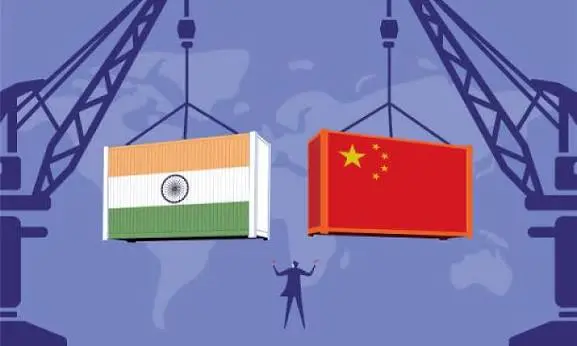
What makes the current moment genuinely exciting — and genuinely consequential — is that India is no longer merely diagnosing its supply chain problems. It is, at scale and with real institutional commitment, attempting to solve them. The question is whether the pace of reform matches the urgency of the opportunity, particularly as India positions itself as an alternative to China in global manufacturing supply chains.
2. The Persistent Challenges: What Still Holds India Back
2.1 The Cost Paradox
The most cited and most damaging challenge remains India's logistics cost burden. While developed economies operate with logistics costs ranging from 6–10% of GDP — the US at approximately 6–8%, China at around 8% — India's costs have historically hovered between 13–16% of GDP. This gap is not merely a statistic. It translates directly into reduced export competitiveness, compressed corporate margins, and a structural disadvantage that makes it harder for Indian manufacturers to compete on global shelves.
The National Logistics Policy (NLP), launched in 2022, set an ambitious target of reducing logistics costs to 8% of GDP by 2030. Progress has been made, but the gap remains wide. Closing it requires not incremental improvement but systemic transformation across infrastructure, regulation, and technology — simultaneously.
2.2 Infrastructure Deficits: The Hardware Gap
Despite the government committing a record ₹11.11 trillion ($132.85 billion) on infrastructure for FY2024-25, India's logistics infrastructure still lags significantly behind its aspirations. Road quality — particularly in rural and semi-urban corridors — remains inconsistent. Major ports face capacity constraints. Rail freight, though improving with the Dedicated Freight Corridors (DFCs), is still underutilised relative to its potential.
The Eastern and Western Dedicated Freight Corridors, now 96% operational, represent one of the most significant infrastructure investments in the country's history. Their full operationalisation is beginning to demonstrate measurable impact — decongesting existing rail routes, cutting transit times, and reducing per-unit freight costs. But this is one corridor ecosystem in a country of continental scale. Last-mile connectivity, particularly to Tier 2 and Tier 3 cities and rural production clusters, remains critically underdeveloped.
2.3 Fragmentation: The Invisible Cost
A structural challenge that rarely receives adequate attention is the extreme fragmentation of the Indian logistics sector. A large majority of logistics services are still managed by small, unorganized players — fleet operators running fewer than five vehicles, local warehousing operators without digital systems, informal freight brokers operating outside any technology platform. This fragmentation creates opacity in pricing, inconsistency in service quality, and near-total absence of end-to-end supply chain visibility.
For manufacturers, especially those supplying to global retailers with stringent compliance and traceability requirements, this fragmentation is not merely an inconvenience — it is a disqualifier. The inability to provide consistent, documented, traceable logistics performance puts Indian supply chains at a disadvantage precisely at the moment when global buyers are looking to diversify away from single-country dependence.
2.4 Regulatory Complexity
While the Goods and Services Tax (GST), implemented in 2017, was a watershed reform that eliminated the cascading effect of multiple interstate taxes and dramatically reduced border crossing delays, India's regulatory landscape for supply chains still presents formidable complexity. Customs documentation remains cumbersome. State-level variations in compliance requirements persist. The multiplicity of agencies involved in port clearances — across Customs, FSSAI, plant quarantine, drug authorities, and others — creates bottlenecks that add days, sometimes weeks, to import and export cycles.
2.5 The Talent Gap
Perhaps the least visible but most consequential challenge is the acute shortage of skilled supply chain professionals. The sector's rapid digitalization — from AI-driven demand planning to automated warehousing to blockchain-based traceability — demands a workforce that can operate at the intersection of technology and operations. India currently lacks this at scale. According to data from the NLP's implementation review, while over 65,000 logistics professionals were trained between 2023 and 2025, and over 100 universities now offer logistics-related courses, the pipeline of talent ready for modern supply chain roles remains insufficient relative to industry need.
Conference

Conference

3. The Innovation Wave: India's Supply Chain Transformation
3.1 Digital Public Infrastructure: The ULIP Revolution
If there is one innovation that most encapsulates India's approach to supply chain transformation, it is the Unified Logistics Interface Platform (ULIP). This government-built digital platform integrates data from more than 30 logistics-related systems across 10 central ministries — bringing railways, ports, highways, customs, and air freight data onto a single interface for the first time.
By August 2025, ULIP had facilitated over 160 crore (1.6 billion) API transactions, with over 930 private companies registered on the platform. Complementing ULIP, the Logistics Data Bank 2.0, launched in September 2025, now enables export container tracking even across international waters, offers multimodal shipment visibility, live container heatmaps to identify congestion, and real-time API-based integration. These are not pilot projects — they represent a functioning national digital logistics nervous system, the likes of which few developing economies have attempted to build.
The significance extends beyond efficiency. ULIP's architecture — modelled on India's broader Digital Public Infrastructure (DPI) philosophy, the same one that powered UPI in payments — creates an open, interoperable layer on which private innovation can be built. This is the "India Stack" approach applied to logistics, and it has the potential to unlock the same kind of ecosystem innovation that transformed payments.
3.2 AI and Predictive Analytics: From Reactive to Anticipatory
Across India's supply chain sector, artificial intelligence is moving from buzzword to operational backbone. AI-powered demand forecasting is helping manufacturers and retailers reduce inventory surpluses and shortages, with measurable improvements in working capital efficiency. Intelligent routing systems calculate optimal delivery paths in real time, accounting for traffic, weather, and vehicle capacity. Automated warehouses — equipped with robotics for picking, sorting, and inventory management — are enabling 24/7 operations with significantly reduced error rates.
The adoption of Generative AI in supply chain management is particularly noteworthy. GenAI applications are now being used for procurement compliance monitoring, supplier communication, and even scenario modelling for supply chain disruptions. When the Iran conflict of early 2026 triggered oil price spikes and shipping route disruptions, companies with AI-enabled supply chain control towers were able to model alternative sourcing and routing strategies within hours — a stark contrast to the days or weeks such recalibration would have required a decade ago.
3.3 Cold Chain Innovation: From Gap to Opportunity
India loses an estimated 15–18% of its agricultural produce annually to cold chain failures — a national tragedy that represents both enormous economic loss and food security risk. But this gap is increasingly being addressed with genuine innovation. Indi cold’s launch of a fully automated frozen facility — a 10,000-pallet Automated Storage and Retrieval System (ASRS) warehouse — in April 2025 represents a new benchmark for cold chain infrastructure in India. The facility incorporates precision temperature control, energy-efficient passive cooling, and AI-driven predictive maintenance.
In October 2025, SWITCH Mobility signed an MOU with Celsius Logistics to deploy 350 electric refrigerated light commercial vehicles — India's largest bulk order of electric reefer trucks and a significant step toward decarbonizing cold chain logistics. Healthcare cold chain is also advancing rapidly: in February 2025, Tech Eagle and Apollo Hospitals launched drone-based diagnostic sample delivery, transporting medical specimens from collection centers to labs — a preview of how drone logistics will first make its mark in high-value, time-sensitive supply chains.
3.4 Drone and Autonomous Logistics: The Last-Mile Frontier
Last-mile delivery — typically the most expensive and time-consuming leg of the supply chain — is being reimagined through a combination of drone technology, autonomous vehicles, and electric micro-mobility. A new regulatory framework introduced in September 2025 is set to replace older, more restrictive drone regulations, creating clearer pathways for commercial deployment. Delivery’s successful test of its autonomous vertical take-off and landing (VTOL) drone technology in December 2025 signals that large-scale commercial drone logistics is no longer speculative — it is impending.
The China-plus-one narrative that has driven global supply chain realignment since 2020 is creating a once-in-a-generation window for India. But capturing this opportunity requires that the last-mile infrastructure — the final connection to manufacturing clusters, agricultural zones, and consumer households — is as advanced as the multimodal backbone being built at the national level.
4. The Policy Architecture: PM Gati Shakti as Operating System
No analysis of India's supply chain future is complete without understanding PM Gati Shakti — the National Master Plan that functions as the operating system for India's entire logistics infrastructure programme. Launched in 2021, it integrates 57 central ministries and all 36 states and union territories on a single GIS-based digital planning platform with over 1,700 data layers.
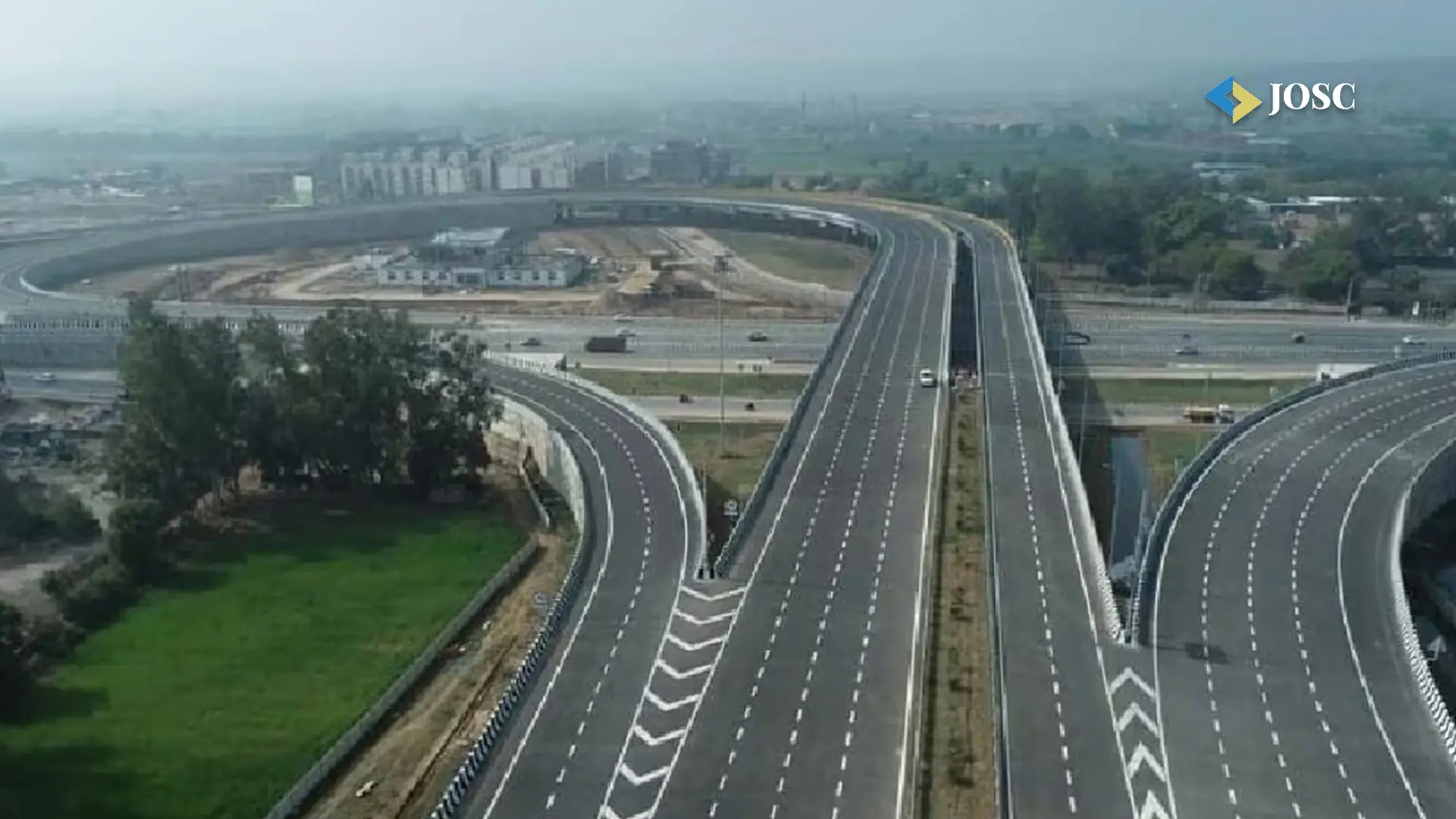
The National Highway network has expanded from 91,287 km in FY14 to 1,46,572 km as of December 2025. Operational high-speed corridors have scaled from approximately 550 km to over 5,300 km in the same period. Inland Water Transport cargo movement has surged from 18 Million Metric Tonnes (MMT) in 2013-14 to 146 MMT in 2024-25, with 32 National Waterways spanning 5,155 km now operational. Thirty-five Multimodal Logistics Parks (MMLPs) have been approved to serve as integrated hubs combining warehousing, inter-modal connectivity, and value-added services.
The Economic Survey 2025-26 specifically identifies GatiShakti's institutionalisation of integrated infrastructure planning as "a defining feature" of India's logistics transition — one that is strengthening project execution, reducing transaction costs, and easing congestion across the supply chain. India has also become the largest recipient of Private Participation in Infrastructure (PPI) investment in South Asia, capturing over 90% of the region's total private infrastructure capital — a testament to investor confidence in the reform trajectory.
5. The Future Roadmap: Five Strategic Imperatives
5.1 From Corridors to Networks: Completing the Multimodal Equation
India must move from building individual infrastructure assets to creating fully integrated multimodal networks. The Dedicated Freight Corridors must connect seamlessly to the MMLPs, which in turn must connect to the agricultural clusters, manufacturing parks, and SEZs that generate and consume freight. The Sagarmala programme's port development must be synchronised with hinterland connectivity. The vision is not individual infrastructure excellence — it is systemic logistics fluency.
5.2 MSME Digitisation: The Missing Link
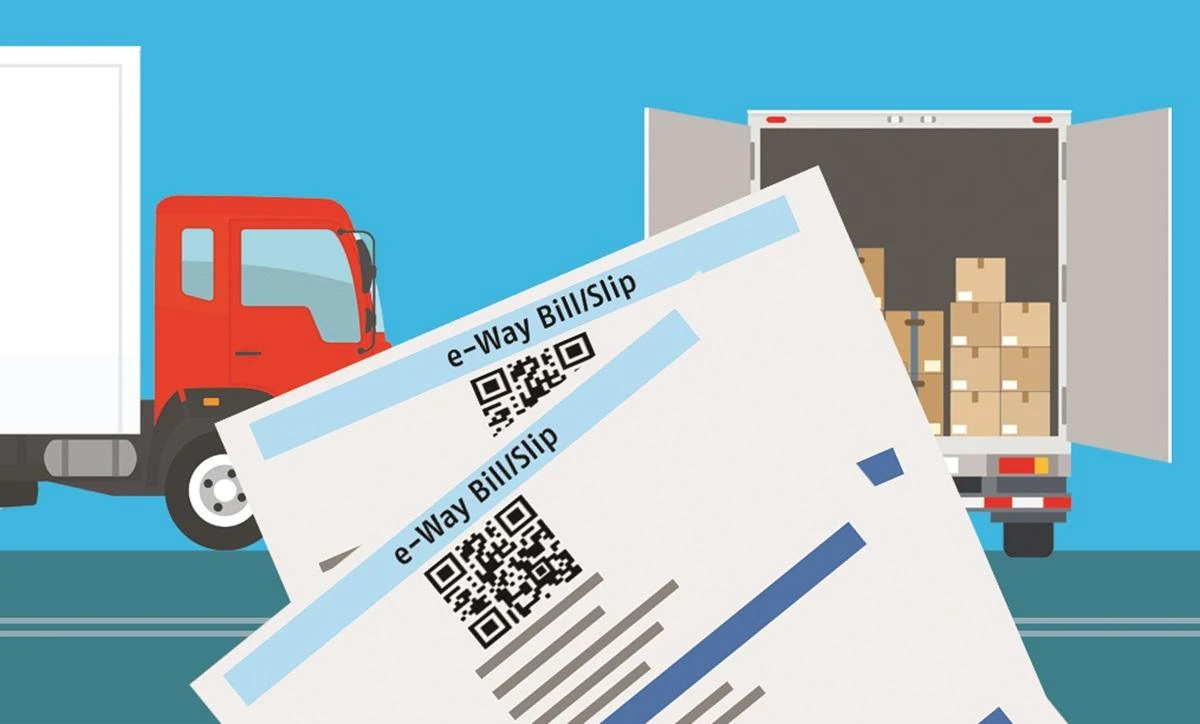
India's 63 million MSMEs are both the primary generators of supply chain volume and the primary source of supply chain opacity. Bringing MSMEs onto digital logistics platforms — through ULIP integrations, e-way bill compliance, digital freight matching, and AI-powered inventory tools accessible on mobile devices — is the single intervention with the greatest multiplier effect on national logistics efficiency. No amount of Grade-A warehousing or smart port infrastructure matters if the upstream supply chain feeding it operates in the analogue.
5.3 Green Logistics: Regulatory Pull, Market Push
India's logistics sector accounts for a disproportionate share of national carbon emissions. The path to net-zero supply chains runs through electrification of the last-mile fleet, hydrogen-powered long-haul trucks, solar-powered warehouses, and route optimization that treats carbon reduction as a cost variable alongside fuel and time. This is not merely an environmental imperative — it is an export market imperative. Global buyers, particularly in Europe, are increasingly requiring scope 3 emissions documentation from their supply chain partners. Indian exporters who cannot provide this data will be structurally disadvantaged in premium markets.
5.4 Talent Architecture for the Digital Supply Chain
The gap between the supply chain India needs and the workforce it has must be treated as a national priority, not a sector-level concern. The establishment of GatiShakti Vishwavidyalaya as India's first dedicated logistics university is an important signal, but the pipeline must be widened dramatically. Industry-academia partnerships, supply chain apprenticeship programmes modelled on Germany's dual education system, and reskilling initiatives targeted at the existing informal logistics workforce are all essential components of a talent strategy commensurate with India's supply chain ambitions.
5.5 Resilience by Design: Learning from 2020–2026
The COVID pandemic of 2020, the Russia-Ukraine conflict, and the Iran crisis of 2026 have all demonstrated, painfully, that efficiency-optimised supply chains are fragility-maximised supply chains. India's future supply chain architecture must embed resilience by design — through strategic inventory buffers at multimodal hubs, supplier diversification mandates for critical sectors, and digital risk monitoring systems that can identify and model disruptions before they cascade. The companies and countries that will win in global supply chains are not those with the leanest networks, but those with the most adaptive ones.
6. Conclusion: The Decade That Will Define India's Place in Global Trade
India's supply chain ecosystem is in the midst of its most consequential transformation in a generation. The convergence of an ambitious policy architecture (GatiShakti, NLP), world-class digital public infrastructure (ULIP, Logistics Data Bank), significant private capital deployment, and a genuinely large domestic market creates conditions that few economies can match.
But the window is not unlimited. The China-plus-one opportunity is real, but it is also being actively competed for — by Vietnam, Bangladesh, Indonesia, and Mexico. The advantage will go to the country that can most reliably deliver not just manufacturing competitiveness, but supply chain reliability, transparency, and sustainability.
India's supply chain story, at its core, is a story about closing gaps — between policy and implementation, between national infrastructure and last-mile reality, between digital aspiration and ground-level adoption. The trajectory is unmistakably positive. What remains is the execution — disciplined, coordinated, and urgent.
The next five years will not merely shape India's logistics sector. They will determine India's position in the global economy for decades to come.
References
- Ministry of Commerce & Industry, Government of India — National Logistics Policy: Three-Year Review (2022–2025), PIB Press Release, September 2025.
- Economic Survey 2025-26 — PM GatiShakti and Infrastructure-Led Growth, Ministry of Finance, January 2026.
- Logistics Data Bank 2.0 Launch — Indian Infrastructure, September 2025.
- India Brand Equity Foundation (IBEF) — Transforming India's Logistics Sector, 2024.
- World Bank Logistics Performance Index, 2023.
- ClearTax / Everfastfreight — Current Trends in Supply Chain Management India, 2025–2026.
- PIB India — ULIP reaches 100 crore API transactions milestone, March 2025.
- 3SC Solutions — Indian Logistics Industry: Trends, Challenges & Growth, 2026.
- Indian Infrastructure Magazine — Big Shift: Evolving Logistics Supply Chain Models, February 2026.
- Drishti IAS / Insights on India — Transformation of India's Logistics Sector, October 2025.
Explore the latest edition of Journal of Supply Chain Magazine and be part of the JOSC News Bulletin.
Discover all our upcoming events and secure your tickets today.
Journal of Supply Chain is a Hansi Bakis Media brand.
Leave Comment
Join the community of 150,000+ industry professionals
Subscribe to our Daily Newsletter
Subscribe For FreeBy continuing you agree to our Privacy Policy & Terms & Conditions
Latest







Feature Articles


Related